Rounded joints
Added fee
This option incurrs an additional fee. +$0.15/joint
This option lets you specify through-hole leads to be trimmed and rounded-over.
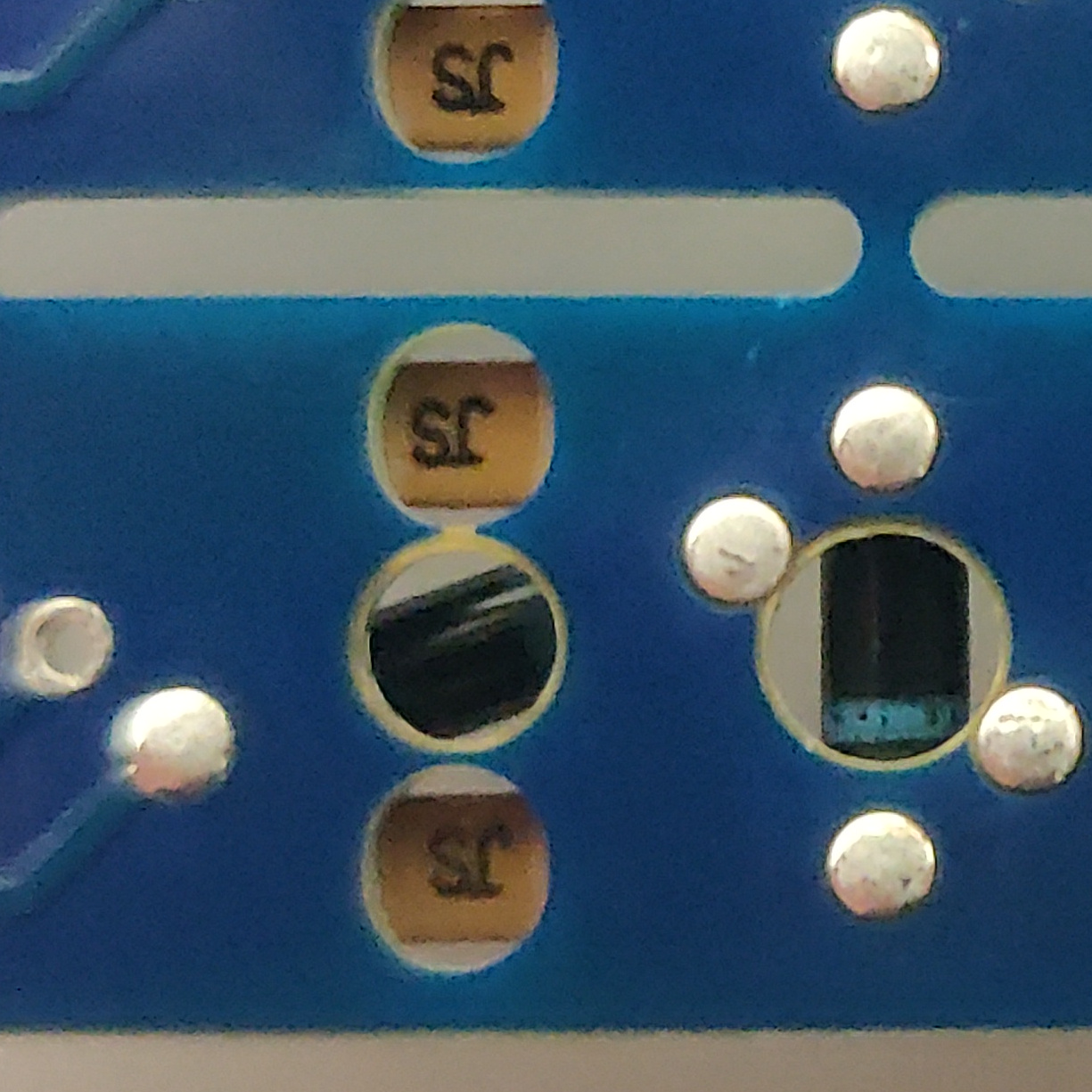
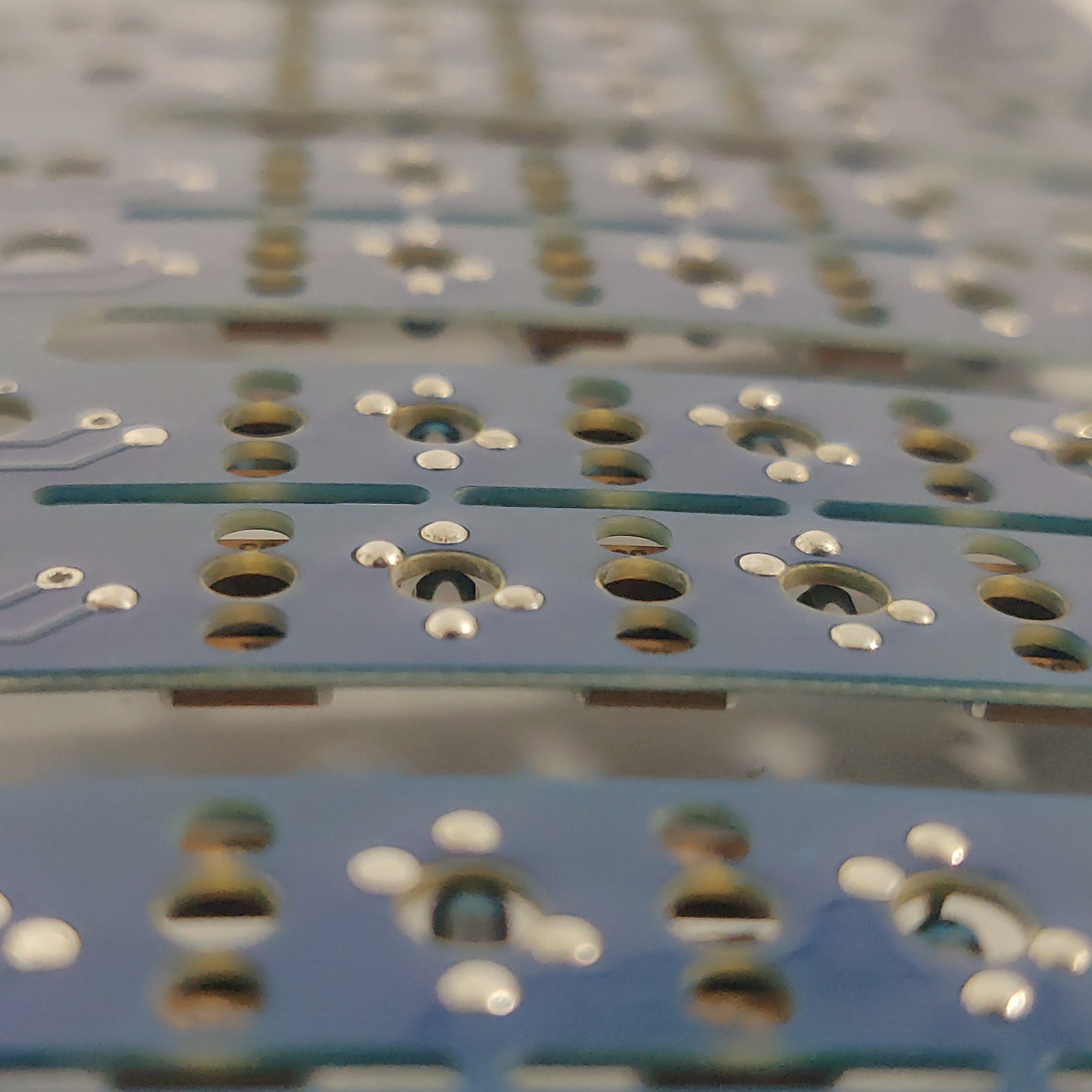
Specified pads will have their through-hole leads trimmed and their solder joints expertly rounded over by an experienced operator.
Specifying pads for rounding
There are two ways to mark specific pads to have rounded joints:
This is the fastest way to mark pads as rounded. You can mark many pads at the same time using this method.
-
If it isn’t already visible, unhide the Properties panel by checking the following:
View > Panels > Properties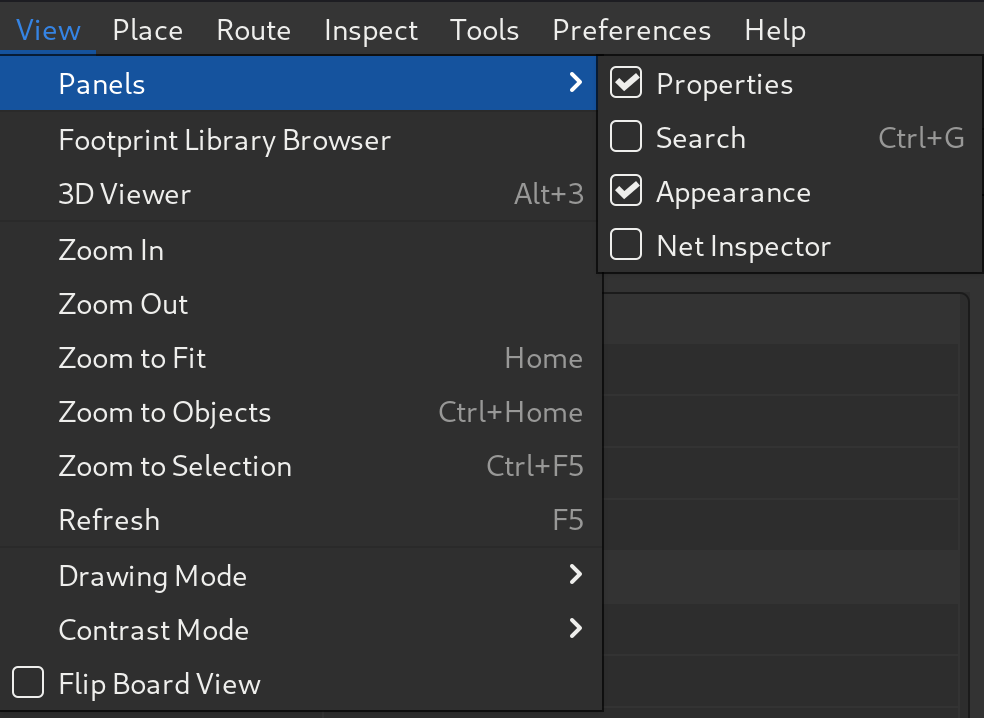
-
Select one or more through-hole pads that you want to mark as rounded.

-
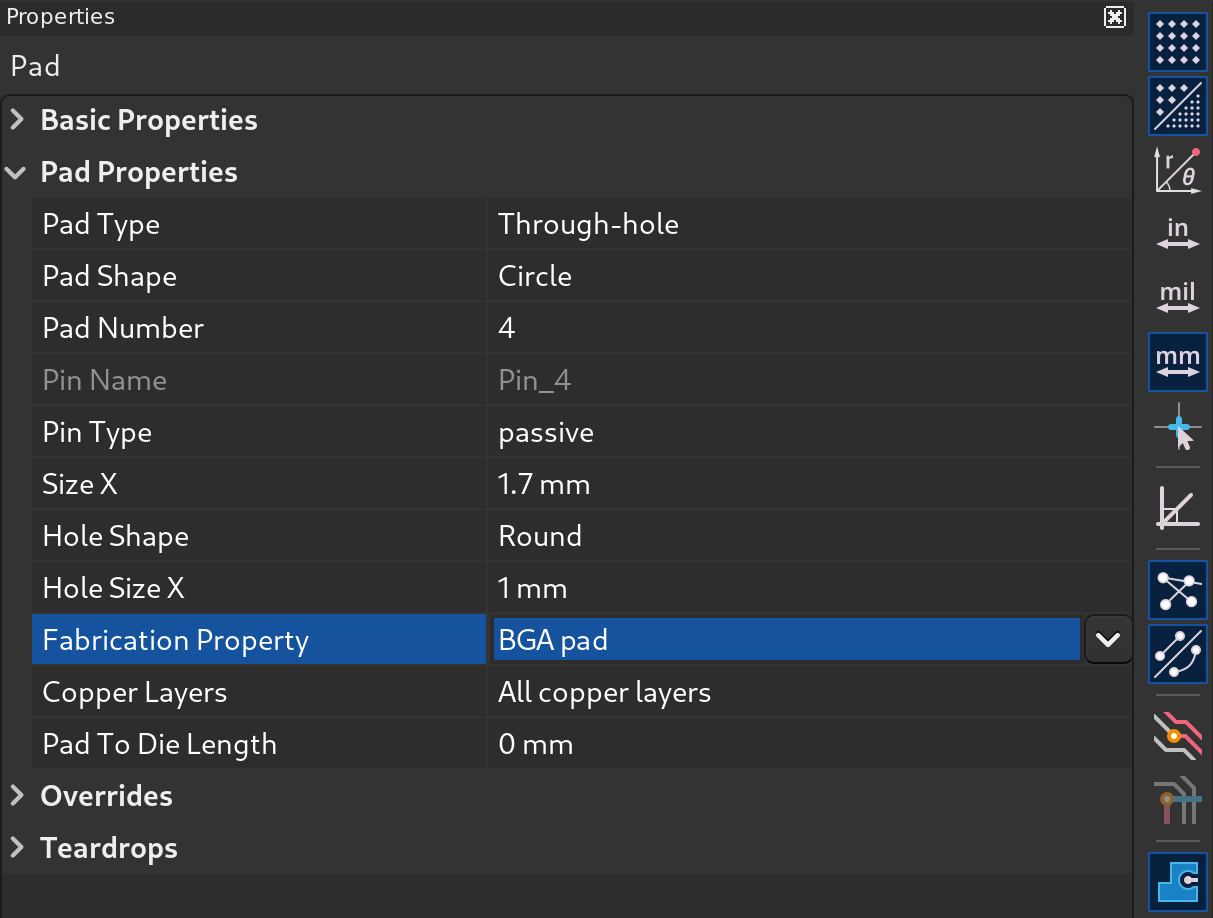
Under “Pad Properties”, make sure “Pad Type” is set to “Through-hole” (it should already be), and change “Fabrication Property” to “BGA pad”.
This is another way to mark pads as rounded. You can only mark one pad at a time using this method.
-
Double-click the through-hole pad that you want to mark as rounded.
-
In the “Pad Properties” pane, make sure “Pad type” is set to “Through-hole” (it should already be), and change “Fabrication property” to “BGA pad”.
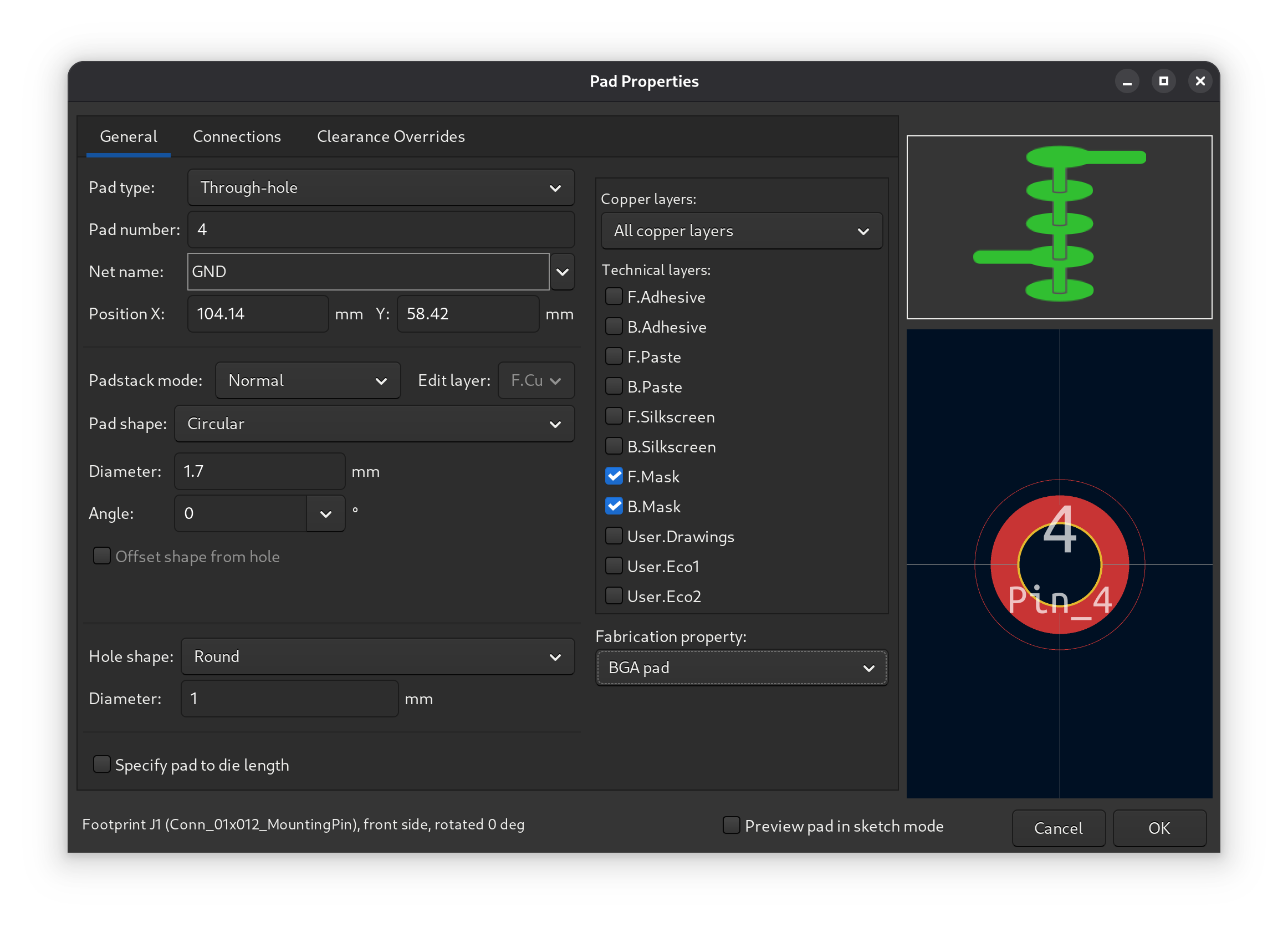
-
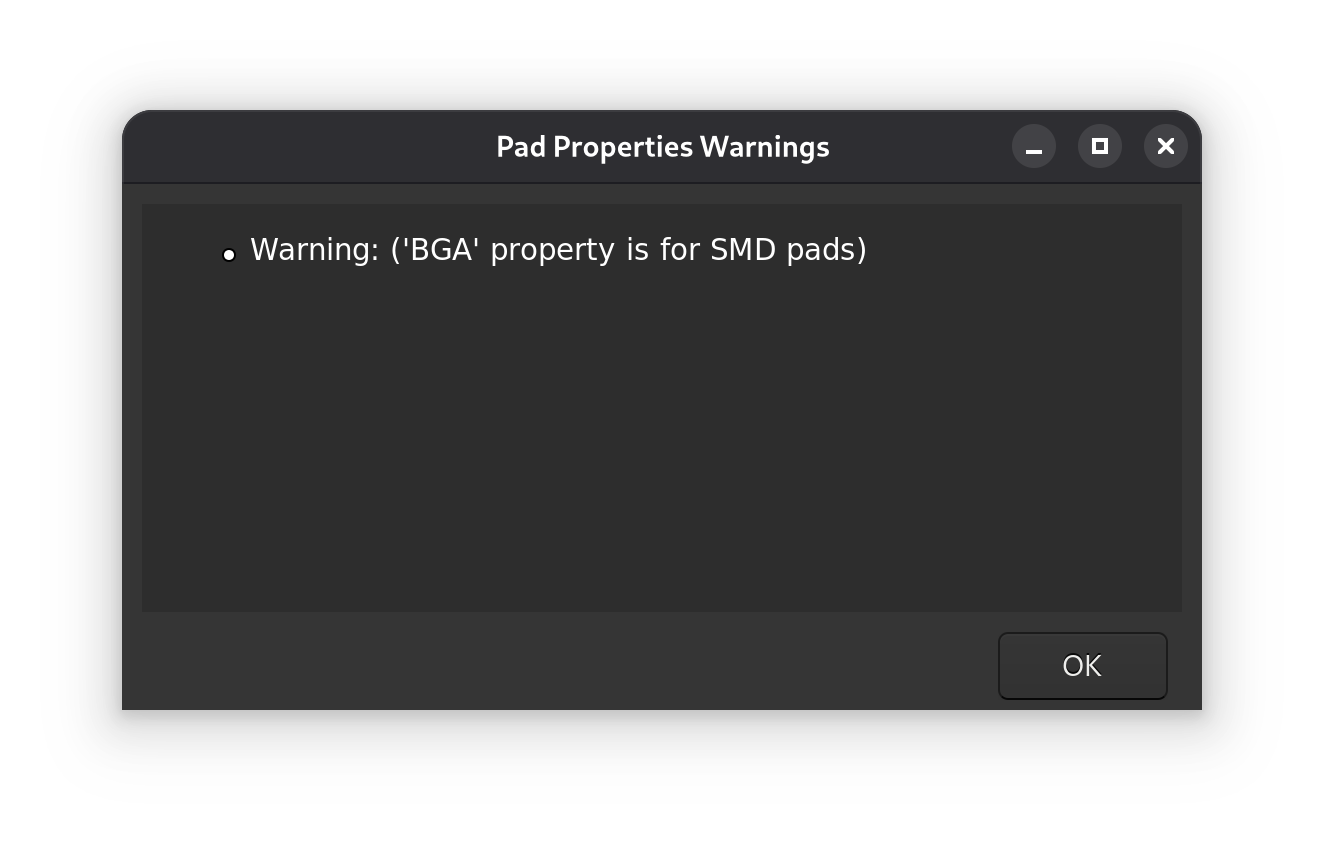
You’ll get a warning about this change. You can safely ignore it.
-
Later, when you run DRC, the same warning will appear. You can also choose to ignore it here as well.
Why are rounded joints useful?
Rounded joints are astheticly pleasing and prevent anyone handling your board from getting pricked by jagged protrusions. However, they can also serve as a functional improvement to your board. Typically, they are specified for certain components in high-voltage applications.
No pricking
Prevents anyone handling your board from getting pricked by jagged protrusions, making boards safer and more comfortable to work with.
Tight space requirements
Since the through-hole leads are trimmed, the overall height of the PCB assembly is typically decreased. Taking from 0.8mm-3mm down to 0mm-0.6mm.
High voltage requirements
Rounded joints reduce the chance of arcing between pads in high voltage applications, which may let you save some space in your design or avoid a conformal coating process.
Cleaning and handling
A single-sided board with rounded joints can be cleaned easily with a cloth. Since the joints are perfectly smooth, the fibres of the cloth won’t get caught on jagged protrusions.